Choosing between AI voice tools is rarely about which one is “best” overall. It is about which tool fits your specific workflow, budget, and output needs. A developer building a product needs a different tool than a podcaster cloning their voice, and a marketing team producing explainer videos needs something different again. This page collects our head-to-head comparisons of the leading AI voice, text-to-speech, voice cloning, and dubbing tools, so you can quickly find the matchup that matters to you.
How to Choose Between AI Voice Tools
Before diving into a specific comparison, it helps to know what actually separates these tools. Five factors decide most buying decisions:
- Voice quality and realism. For long-form audio like audiobooks and full podcast episodes, naturalness matters far more than it does for a short ad read. ElevenLabs leads here, but the gap narrows for shorter content.
- Voice cloning. If you want to clone your own voice, check whether the tool offers instant cloning (fast, good for drafts) or professional cloning (higher fidelity, better for a host voice).
- Pricing and free tiers. Credit-based plans reward light users but get expensive at scale. Match the plan limits to how much audio you actually produce each month.
- API access. Developers building voice into a product need a documented API. Creators using a browser studio usually do not.
- Commercial licensing. Free tiers rarely permit commercial use. If you monetize your content, confirm the plan grants commercial rights before you publish.
With those factors in mind, here are our detailed head-to-head comparisons.
Before estimating total production cost, check our TTS pricing comparison for free tiers, paid quotas, API access, commercial-use rules, and voice-cloning availability across 12 tools.
Featured Comparisons
- ElevenLabs vs Murf — Realistic voice engine and API versus a browser voiceover studio for creators and teams.
- ElevenLabs vs LOVO — Voice quality and cloning depth versus expressive voices plus a built-in video editor.
- ElevenLabs vs Descript — AI voice and cloning versus transcript-based editing for podcasts.
- Murf vs LOVO — Two voiceover studios compared for creators, e-learning, and marketing video.
Comparisons at a Glance
| Comparison | Best For | Our Pick | Voice Cloning | API | Read Guide |
|---|---|---|---|---|---|
| ElevenLabs vs Murf | Realistic voice + developer API vs studio voiceover | ElevenLabs (voice/API), Murf (studio) | Both | Both | ElevenLabs vs Murf |
| ElevenLabs vs LOVO | Voice quality vs expressive voices + video editor | ElevenLabs (quality), LOVO (expression) | Both | Both | ElevenLabs vs LOVO |
| ElevenLabs vs Descript | AI voice vs transcript-based podcast editing | ElevenLabs (voice), Descript (editing) | Both | ElevenLabs | ElevenLabs vs Descript |
| Murf vs LOVO | Two voiceover studios for creators and teams | Murf (polish), LOVO (emotion) | Both (paid) | Both | Murf vs LOVO |
Related Buying Guides
Not looking for a head-to-head? These guides compare multiple tools for a specific need:
- Best Free ElevenLabs Alternatives — 7 free AI voice tools and their real free-tier limits.
- Best AI Text to Speech for YouTube — Top TTS tools for video creators.
- Best TTS for Podcasts — AI voice tools for narration, intros, and promos.
- PlayHT Alternatives 2026 — Where to go now that PlayHT has shut down.
We update these comparisons as tools change pricing, add features, or shift their free tiers. Pricing in the AI voice space moves quickly, so always confirm the current rate on each tool’s official site before subscribing.
Comparison Decision Map
Use this table when you are not sure which comparison to open first. The fastest path is to start with the workflow question, then read the matchup that matches the decision you are actually trying to make.
| Decision | Start With | Why | Next Guide |
|---|---|---|---|
| Best realistic AI voice vs business studio | ElevenLabs vs Murf | This is the most common creator and business buyer split: voice realism/API depth versus structured studio workflow. | Read ElevenLabs vs Murf |
| AI voice quality vs podcast/video editing | ElevenLabs vs Descript | Use this when the choice is between generating polished AI voice and editing recorded audio by transcript. | Read ElevenLabs vs Descript |
| Creator voiceover studio vs expressive video voices | Murf vs LOVO | Good for marketing, e-learning, short-form videos, and teams choosing between two browser studio workflows. | Read Murf vs LOVO |
| Best free or low-cost path away from ElevenLabs | Free ElevenLabs alternatives | Use this when the real constraint is free quota, API testing, or cheaper studio workflow. | Compare free alternatives |
| Voice cloning for creators, editors, and developers | Best voice cloning software | Use this when cloning quality, consent, and production workflow matter more than generic TTS. | Compare voice cloning tools |
Real Workflow Screenshots
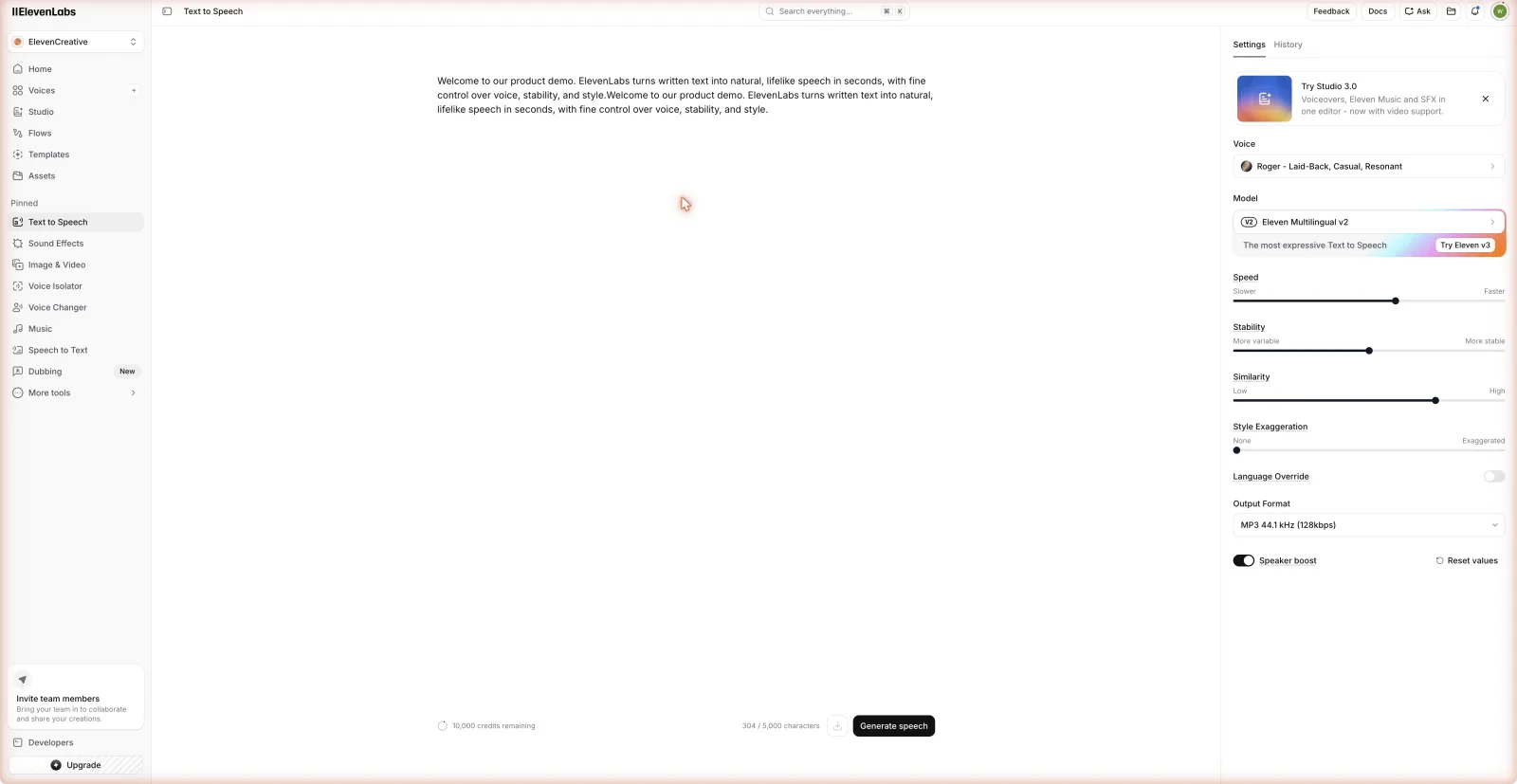
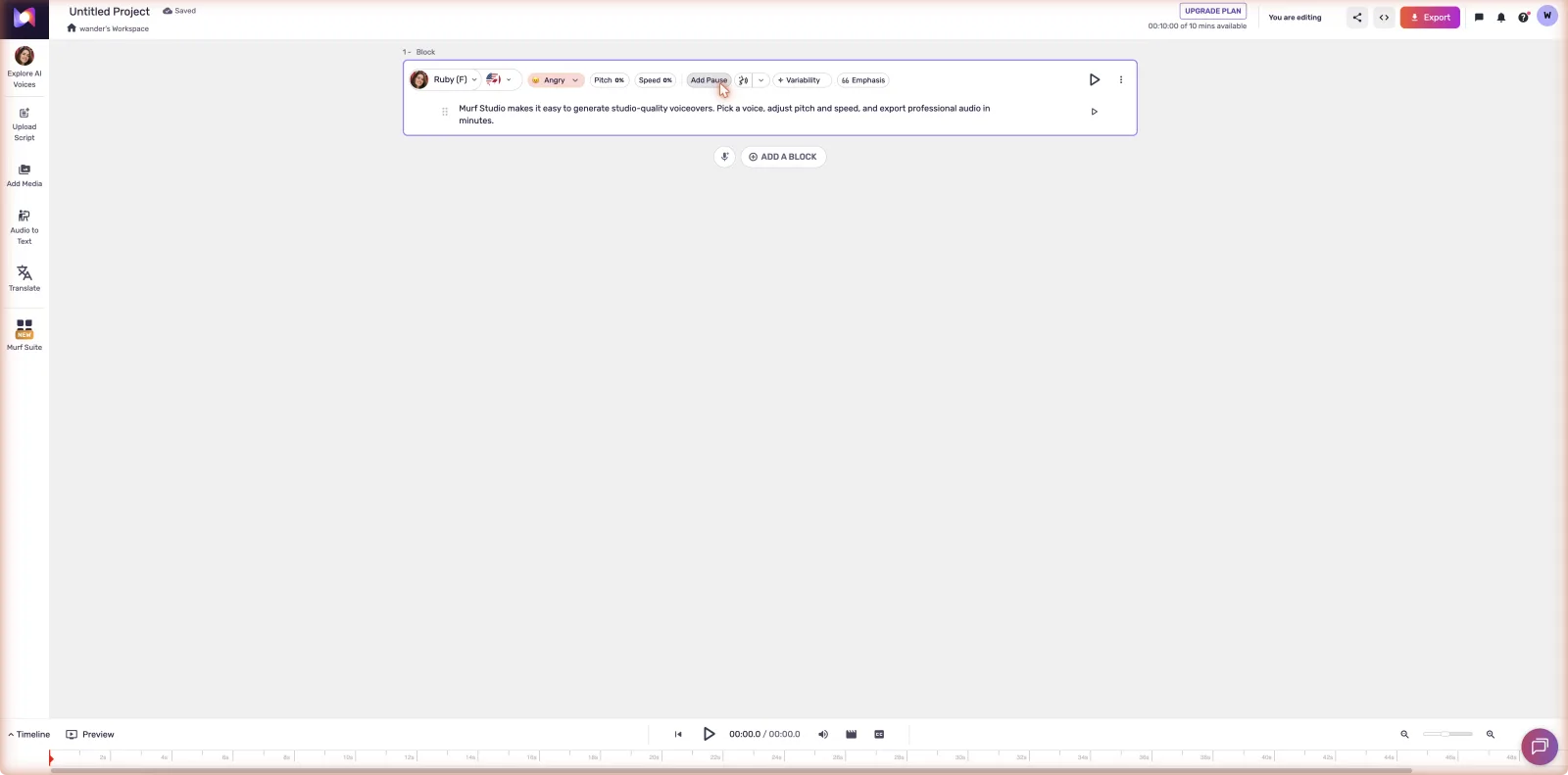
AI voice tools can look similar from pricing pages, but the interface often reveals the real workflow. ElevenLabs is closer to a voice engine and production workspace, while Murf is closer to a script-based voiceover studio for structured narration.
High-Intent Buying Paths
If you are not choosing between two named tools yet, start from the job you need the AI voice tool to do. These guides connect the comparison hub to the highest-intent workflows on the site.
- Best text to speech API for developers — choose this if you need authentication, latency, quota, and cost planning.
- Best TTS for podcasts — choose this if the output must work for intros, sponsor reads, full episodes, or podcast promos.
- Best TTS for audiobooks — choose this if long-form listener fatigue and chapter workflow matter.
- Best voice cloning software — choose this if consent, cloning quality, and recurring voice assets are central.
- Best free AI text to speech — choose this if budget and free-tier limits matter most.
Short answer: start with ElevenLabs vs Murf if you are choosing a serious AI voice platform, use ElevenLabs vs Descript if editing is the real workflow question, and use the buying guides when your decision is driven by API, podcasts, audiobooks, free tiers, or voice cloning.
For deeper two-tool decisions, use the focused comparisons instead of the broad table. Developers should compare ElevenLabs vs OpenAI TTS, ElevenLabs vs Google Cloud Text-to-Speech, or OpenAI TTS vs Google Cloud Text-to-Speech. Creators choosing between voiceover and editing should read Murf vs Descript, and product teams should review text-to-speech for SaaS apps.
New focused comparisons are also useful for close-fit decisions: ElevenLabs vs WellSaid Labs for premium voiceover platforms, and Speechify vs Descript for reading support versus editing workflows.
Frequently Asked Questions
Which AI voice tool is the best overall?
For most creators and developers, ElevenLabs is the strongest all-round choice thanks to its voice realism, professional voice cloning, multilingual dubbing, and a mature API. That said, “best” depends on your use case. Murf and LOVO are better fits if you want a browser-based voiceover studio rather than a voice engine, and Descript wins if your main need is transcript-based podcast editing rather than voice generation.
Which tool has the best voice cloning?
ElevenLabs offers the most realistic voice cloning, with both instant cloning from a short sample and professional cloning trained on longer audio for higher fidelity. LOVO also supports cloning with a focus on expressive delivery, while Murf and Descript offer more limited cloning on higher tiers. If a cloned host voice is central to your project, start with ElevenLabs.
Do these tools allow commercial use?
Most tools grant commercial rights on their paid plans but not on free tiers. If you run a monetized podcast, YouTube channel, or client work, you need a paid plan that explicitly includes commercial licensing. Always check the specific plan’s terms before publishing, since licensing can differ between a tool’s “personal” and “commercial” tiers.